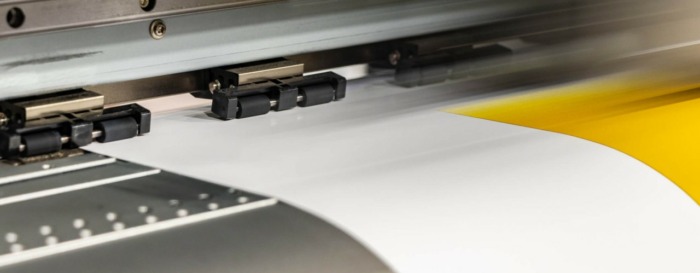
In 2026, large format printing functions more like a high-utility business asset than a one-off marketing expense. From an industry veteran’s perspective, the real value of signage isn’t in the initial install. It’s in the lifecycle: maintenance, durability, and eventual decommissioning. Today’s operations and marketing directors face a landscape defined by material science, specifically solving persistent headaches like UV degradation and adhesive “ghosting.”
At CDP, we view large-scale visual communication as a branch of technical asset management. We prioritise the engineering behind the output everything from RIP software calibration to substrate rigidity to ensure your branding survives environmental stressors without draining your long-term budget.
The industry is currently witnessing a terminal decline in traditional PVC (Polyvinyl Chloride). Experienced print buyers recognise that PVC is an operational liability due to high VOC output and lack of end-of-life recycling options. By 2026, “sustainability” requires a move toward a circular economy where substrates are reclaimed or repurposed instead of being dumped.
Our approach aligns with a strict commitment to the environment, utilising the latest digital wide-format technology to reduce chemical footprints without compromising on quality. We focus on high-durability alternatives that deliver the resolution required for high-impact large format printing branding while adhering to modern CSR standards.
Our products, ranging from modular exhibition stands to heavy-duty outdoor mesh, ensure your physical presence stays compliant with modern environmental standards.
National brands often struggle with “brand drift” where a sign on a brick wall looks slightly off compared to a decal on a van. Maintaining consistency across different materials is a significant technical hurdle. We solve this by applying G7-certified colour management to close the gap between different production runs.
We’ve seen it time and again: “cheap” signage eventually becomes the most expensive line item in the budget. UV fading and mechanical failure are the primary drains on marketing spend. For 2026, we advocate for “Operational Durability” specifying materials based on exactly how long they need to perform in the field.
Managing “one-off” signage orders for dozens of regional offices is an administrative nightmare. By 2026, smart businesses are shifting toward “on-demand” decentralised ordering with centralised brand control.
A vehicle wrap is a high-performance protective coating as much as it is a branding tool. Any experienced fitter will tell you that the quality of the wrap directly impacts the eventual resale value of the van.
Treating print as a commodity usually leads to inconsistent branding and wasted capital. Large format printing is a technical discipline that requires a deep understanding of chemical bonding and mechanical stress.
To audit your current estate, look at these three professional metrics:
Our team takes a data-driven approach to your branding. We focus on durability and compliance to ensure you get the best possible cost-efficiency.
Contact our team to request a Visual Asset Health-Check. We will identify the technical risks in your current model and help you transition to a more durable, sustainable, and professionally managed Large Format Printing strategy.
The industry standard is moving toward Aluminium Composite Materials (ACM) like Dibond, paired with LED-cured UV inks. These resist weather and mechanical wear far better than traditional foam-core boards.
A storefront web-to-print portal is the best solution. By locking down assets centrally, you guarantee that every print run matches your master guidelines, no matter where it’s produced.
Yes. Modern PVC-free substrates match the tensile strength of traditional vinyl. When paired with latex or LED inks, they provide a long-lasting, high-performance solution that meets ESG requirements.

74-82 Rose Lane,
Liverpool,
L18 8EE

Tel: 0151 724 7000
Fax: 0151 724 6478
Unit 1,
Tomo Industrial Estate,
Packet Boat Lane,
Cowley,
Uxbridge,
UB8 2JP
Tel: 01895 462462
Fax: 01895 420911