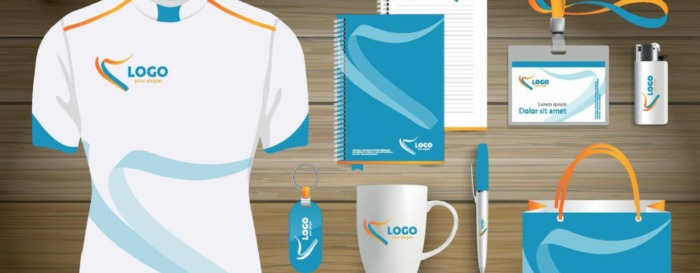
By 2026, the primary challenge for marketing directors is no longer reaching an audience but maintaining a presence after the digital impression fades. As digital ad auctions reach a point of diminishing returns, promotional merchandise has evolved into a high-yield physical asset that hedges against digital inflation. At CDP, we move away from the concept of “giveaways” and focus on utility-driven touchpoints. Investing in physical assets ensures your brand occupies a permanent space in your client’s physical environment, creating a level of brand recall that digital channels which are ephemeral and easily blocked fail to sustain.
Most marketing budgets are misallocated because they focus on the unit price of an item rather than its lifecycle. A £2.00 LinkedIn click buys you a single interaction that lasts seconds. In contrast, a £5.00 high-quality branded desk item or tech accessory may be used daily for 12 months.
To provide a transparent baseline for budget allocation, we have modelled these figures on average B2B performance metrics. While specific campaign costs vary, this comparison highlights the “Attribution Decay” inherent in digital-only strategies:
When you calculate the Cost Per Impression (CPI), the physical item is significantly more efficient. A £5.00 item used over 250 working days results in a cost of just 2p per day for a front-of-mind brand impression. This approach lowers the long-term cost of brand recall and provides a much higher yield on your marketing spend than recurring digital ad auctions.
There is a fundamental difference in how humans perceive value. “Zero-cost” digital assets such as PDFs or email newsletters are often perceived as having low intrinsic value. Physical objects trigger The Endowment Effect: a psychological bias where individuals attribute higher value to things merely because they own them.
We focus on delivering useful items, such as premium stationery or integrated tech, not disposable novelties. Providing an object that solves a daily problem builds a foundation of trust and reciprocity, moving the client relationship from a digital transaction to a tangible partnership.
Selecting the wrong promotional merchandise carries a significant operational risk. Low-quality items act as “Negative Brand Ambassadors.” If a branded pen leaks on a client’s desk or a portable charger fails, the recipient subconsciously associates that mechanical failure with your professional service standards.
Cheaply produced items also struggle with “Brand Drift.” If your logo is printed on a surface that causes ink bleeding or poor adhesion, your corporate identity is visually compromised. We ensure your assets reflect your actual business quality through precision Lithographic Print and Digital Printing. By using CMYK and Pantone matching to ensure brand-accurate colour reproduction, we protect your brand equity. High-build quality signals to your clients that you apply the same rigour to your primary services as you do to your physical touchpoints.
Truth is that sourcing promotional merchandise from unverified global supply chains creates a significant reputational and legal risk. If your merchandise is found to be produced under unethical conditions or using non-recyclable materials, it can undermine years of CSR (Corporate Social Responsibility) work.
We mitigate this risk through our Procurement and Supply Chain Management, prioritising substrates that are recycled, biodegradable, or sustainably forested. By vetting every vendor in our supply chain, we provide you with the documentation needed for Scope 3 emissions reporting and ESG audits. Choosing sustainable Promotional Merchandise ensures your physical branding aligns with the ethical expectations of your stakeholders and clients.
The most effective promotional merchandise campaigns often fail during the “storage and distribution” phase. This is known as the “post-room bottleneck,” where marketing teams lack the space to store inventory or the time to pack and ship individual items.
We manage the entire “Marketing Swag” lifecycle through our integrated infrastructure:
The Challenge: Sovini Trade Supplies required a robust solution to manage a growing inventory of business stationery, specialised workwear, and promotional merchandise. Managing fragmented orders across multiple suppliers was causing brand inconsistency and administrative fatigue.
The CDP Solution: We transitioned the client to the CDP Storefront system. This centralised portal allowed Sovini to manage their entire product range in one place. We produced their specialised clothing and promotional merchandise assets, holding the inventory in our secure warehouse for on-demand distribution.
The Result: By centralising their procurement, Sovini achieved 100% brand uniformity across all physical touchpoints. The “on-demand” nature of the Storefront removed the need for local stock management, ensuring that every apprentice and trade professional received high-quality, brand-accurate gear without logistical delays.
Outsourcing the logistics reclaims dozens of hours for your marketing team and ensures that your promotional merchandise is actually deployed to clients rather than sitting forgotten in a cupboard.
Strategic promotional merchandise should be used as a “Visual Interrupt.” Instead of generic giveaways, we recommend targeted, high-value gifting for contract renewals or high-stakes pitches.
For example, in Rent Review Mailing scenarios, including a high-quality physical “gift” ensures the envelope is prioritised and opened by the decision-maker. This tactical use of Promotional Merchandise ensures your critical notices bypass administrative filters and reach the correct hands, significantly increasing the response rate of your most important correspondence.
Contact our team to request a promotional merchandise Strategy Review. We will audit your current spend and help you develop a high-impact, utility-driven physical branding plan.

74-82 Rose Lane,
Liverpool,
L18 8EE

Tel: 0151 724 7000
Fax: 0151 724 6478
Unit 1,
Tomo Industrial Estate,
Packet Boat Lane,
Cowley,
Uxbridge,
UB8 2JP
Tel: 01895 462462
Fax: 01895 420911