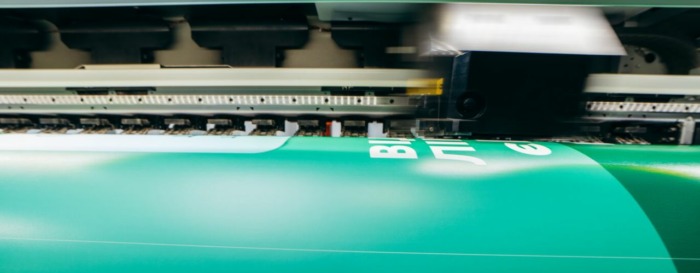
Signage is the backbone of your physical infrastructure. Veteran Retail Ops and Brand Managers treat it with the same rigour as structural engineering because material choice, installation precision, and proactive maintenance dictate footfall conversion. We are moving past basic brand storytelling to examine the technical variables that separate a depreciating asset from a high-yield storefront.
In the signage industry, the cheapest quote almost always ends up costing the most over a three-year cycle. When considering sign printing and graphic display for exterior use, the wrong substrate leads to thermal expansion, warping, and “ghosting”. These defects signal operational neglect to every passerby. Procurement teams often prioritise initial CAPEX and overlook the long-term OPEX of substrate fatigue.
The 60-Second Fascia Audit
Examine your main signage for these three failure points:
These defects leak brand credibility. Get a Professional Technical Assessment before minor wear leads to a total estate replacement.
Visibility does not guarantee legibility. A sign visible from 100 metres is useless if poor kerning or low contrast makes it impossible to decode at speed. We apply the “Rule of Five”. A customer must identify the brand, the offering, and the direction in under five seconds. Missing this window creates a friction-filled customer journey.
Advanced sign printing utilises high UV-resistance and high-build white inks to keep messages punchy in low light. We use contrast-ratio modelling to ensure corporate colours perform against a grey British sky. This clarity guides customers into your premises and removes the hesitation that kills a sale.
Strategic signage requires weeks of site surveys, local authority planning, and material procurement. A high-quality installation typically takes 4 to 8 weeks. Waiting for a sign to fail before starting the replacement process is an operational error that results in months of “dead” storefront presence.
Proactive brands audit their estates six months before estimated material fatigue dates. This is vital in conservation areas where planning adds another 12 weeks to the timeline. Without a Signage Health Log for every site, you are managing by crisis.
Effective wayfinding reduces cognitive load. Once a customer enters, the logic shifts to process navigation. If they feel lost, dwell time decreases and the propensity to buy drops. Consistent visual cues guide users toward high-value areas.
Internal signs must mirror the authority of vehicle liveries. We use the CDP Storefront to standardise internal graphics across multi-site businesses. This stops “Brand Drift” where branches use ad-hoc paper signs. A managed storefront allows managers to order pre-approved A-Frames or hanging signs in seconds.
By 2026, traditional PVC-based banners will be a liability in ESG reporting. Shifting to PVC-free polymers, recyclable honeycomb boards, and water-based latex inks lowers Scope 3 emissions. It also satisfies supply chain audits.
Procurement directors are currently adopting water-based latex inks to eliminate VOC off-gassing. Choosing sustainable sign printing services for corporate facilities future-proofs your supply chain against upcoming environmental taxes. It ensures physical assets stay off the “environmental debt” side of your balance sheet.
Inconsistent execution threatens brand equity. Managing this at scale requires a centralised digital asset library linked to a production hub. Removing local discretion from signage procurement protects the brand and cuts down admin hours.
We build “Signage Specification Bibles”. These documents dictate the exact luminosity of LEDs, precise RAL codes for powder-coated frames, and mandatory substrates. The result is a uniform look regardless of geography. Professional sign printing and graphic display management ensures a storefront in Glasgow perfectly mirrors the quality of one in London.
Aesthetics are secondary to structural engineering for large-format displays. A “sail effect” exerts hundreds of kilograms of pressure on a fascia during a UK gale. We calculate wind-loading requirements before recommending any mounting system.
Mechanical fixings must be rated for the specific building substrate such as brick, cladding, or stone. The physics of the install must be verified. Neglect here creates a significant public liability risk.
Faded signage is a signal to the market. It suggests the business is struggling or that attention to detail has lapsed. CFOs should view this as “Brand Maintenance” instead of discretionary marketing spend.
The opportunity cost is clear. If competitors invest in modern, high-contrast displays while your fascia peels, you are handing over market share. Signage is your only marketing asset that works 24 hours a day with zero Cost Per Click.
Signage pays for itself through longevity. It defines your territory and converts footfall into revenue. If your signage is faded or warping, you are leaking margin every time a potential customer walks past.
By 2026, dominant brands will treat signage as a high-performance technical asset. Visibility is a science.
Contact our display experts for a full Visual Impact & Compliance Audit. We ensure your Sign Printing is durable, compliant, and engineered for maximum footfall conversion.

74-82 Rose Lane,
Liverpool,
L18 8EE

Tel: 0151 724 7000
Fax: 0151 724 6478
Unit 1,
Tomo Industrial Estate,
Packet Boat Lane,
Cowley,
Uxbridge,
UB8 2JP
Tel: 01895 462462
Fax: 01895 420911