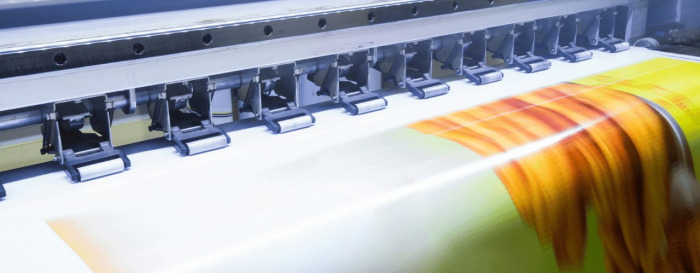
Many organisations perfect their digital brand guidelines only to see the physical execution fail during a harsh winter. High-quality sign printing serves as a strategic asset that anchors your reputation in the real world. At CDP, we act as an operational partner to bridge the gap between design and installation. Every month an organisation delays a professional print audit, it likely loses budget to ad-hoc ordering and inefficient material choices. Our team prioritises the elimination of this waste by centralising your requirements and ensuring the job is done right the first time.
A sign competes with street furniture, shadows, and architectural details. Industry-grade sign printing relies on a strict information hierarchy. You have a limited window to register in a viewer’s mind. The brain rejects displays that crowd the substrate with too many lines of text.
Legibility depends on the Light Reflectance Value (LRV). This describes the contrast ratio between the copy and the substrate. We solve this by specifying high-contrast pairings to ensure your message remains perceivable in the flat light of a UK winter. We strip signs back to the core brand and a single call to action. This ensures the hardware performs its primary function of stopping the scroll of the physical world. Faded or damaged displays create a trust gap that drives potential customers away. Stabilising your budget and securing your physical brand presence begins with a clear-eyed assessment of your current estate.
Strong sign printing starts with fast recognition. A sign needs one clear message, strong colour contrast, and enough empty space around the text for people to read it quickly. Busy layouts reduce impact because viewers have to work harder to understand the point.
Placement affects how the sign performs. A sign at eye level behaves differently from a roadside board, window graphic, or high-mounted fascia sign. Each format requires the correct letter height and layout based on viewing distance. Matte finishes reduce glare in bright interiors, while outdoor signs need finishes that protect against moisture and UV exposure.
Clear structure improves recall. When a sign presents a single message with a clear hierarchy, it becomes easier for people to process and remember. That clarity increases the likelihood that your sign will influence action rather than be ignored.
A professional signage strategy is only as effective as the technical site survey that precedes it. We do not simply measure for height and width. We evaluate the structural integrity of the mounting surface. Whether we are dealing with aged brickwork, curtain walling, or composite cladding, the choice of mechanical fixings is as vital as the print itself.
An expert survey also assesses ambient light interference and potential obstructions that only become visible at certain times of day. By identifying these blind spots during the pre-production phase, we eliminate the need for costly post-installation adjustments. This proactive approach ensures your signage integrates seamlessly with the built environment rather than fighting against it.
Substrate fatigue causes most failures in the field. Boards bow and pop their screws when the material lacks the correct coefficient of expansion to handle UK temperature swings. A dark sign in direct sun reaches high temperatures and then drops to sub-zero levels in winter.
We prevent these failures by using Aluminium Dibond. This material provides a polyethylene core sandwiched between aluminium skins to create the rigidity needed to stay flat over large spans. For clients with strict ESG mandates, we use Polypropylene (PP). This substrate offers chemical resistance and stays out of landfills because it is fully recyclable. We apply UV-stable overlaminates to every project to stop ghosting and fading from destroying the impact of your signage.
For organisations with a national footprint, the greatest challenge is maintaining consistency across the entire estate. Brand drift occurs when regional sites use varying suppliers, leading to inconsistent ink sets or substrate thicknesses. We mitigate this through a centralised standardised specification document. By locking in your exact material requirements, we ensure your identity in Liverpool is a literal match for your identity in London.
Experienced procurement officers look past the initial price per board to the Total Cost of Ownership. A sign that requires frequent replacement is significantly more expensive than a premium board with a long lifecycle. We help you calculate the value of durability, factoring in installation access and removal logistics to provide a true reflection of your signage investment.
The Equality Act sets a standard for operational excellence. Proper sign printing for accessibility requires more than a Braille strip. It demands an understanding of tactile heights and mounting positions. We eliminate specular reflection and glare from overhead lights by using matte finishes.
We prioritise clean, sans-serif fonts because the human brain processes these shapes faster. When we manage your wayfinding project, we ensure your site stays navigable for every visitor. Our team provides professional assurance that your premises stay compliant and welcoming.
Your fleet acts as a high-reach, mobile billboard network. Vehicle livery represents a difficult form of sign printing from a technical standpoint. The vinyl survives road salts, high-pressure washes, and constant vibration.
We specify high-conformity cast vinyls for deep recesses to prevent peeling where the film pulls away from the curves of the vehicle. Consistency determines the success of a fleet. Our colour-matching stays exact across different batches of vinyl. We manage this end-to-end so your brand looks sharp in a rear-view mirror.
Print overspend happens when different sites order materials at different times without coordination. CDP centralises this process to capture lost revenue. We manage your production and sign printing stock from our Liverpool and London hubs. This allows you to leverage economies of scale across your entire estate.
The veteran’s site audit checklist includes:
Our real value comes from decades of experience with site surveys and factory production. We know which inks bond to specific substrates. We understand why certain fixings fail in high-wind coastal areas. Our team handles the logistics and technical specs through CDP Storefront to manage your inventories.
We understand the technical requirements of large-scale sign printing better than most because we manage the process from the warehouse floor to the final installation. Our London and Liverpool warehouses provide centralised stock management. We roll up our sleeves to hit deadlines that others find impossible.
Contact our team in Liverpool or London today to book your free Print Audit. Let an expert show you how professional sign printing streamlines your operations and elevates your brand. Get in touch to discuss your next project.
Longevity depends on the substrate and the ink set. We specify UV-stable inks and protective overlaminates to provide a multi-year lifespan for permanent exterior boards.
Yes. Achieving brand consistency across substrates requires precision colour management and advanced profiling.
Centralised procurement. By storing stock in our warehouses, we provide on-demand delivery, eliminating ad-hoc ordering and reducing unnecessary spend.
Requirements vary by local authority. We advise on Deemed Consent rules to ensure your installation proceeds without legal interruptions.

74-82 Rose Lane,
Liverpool,
L18 8EE

Tel: 0151 724 7000
Fax: 0151 724 6478
Unit 1,
Tomo Industrial Estate,
Packet Boat Lane,
Cowley,
Uxbridge,
UB8 2JP
Tel: 01895 462462
Fax: 01895 420911