Home » Large Format Printing for Outdoor Signage: What Affects Visibility After Dark?
Large Format Printing for Outdoor Signage: What Affects Visibility After Dark?
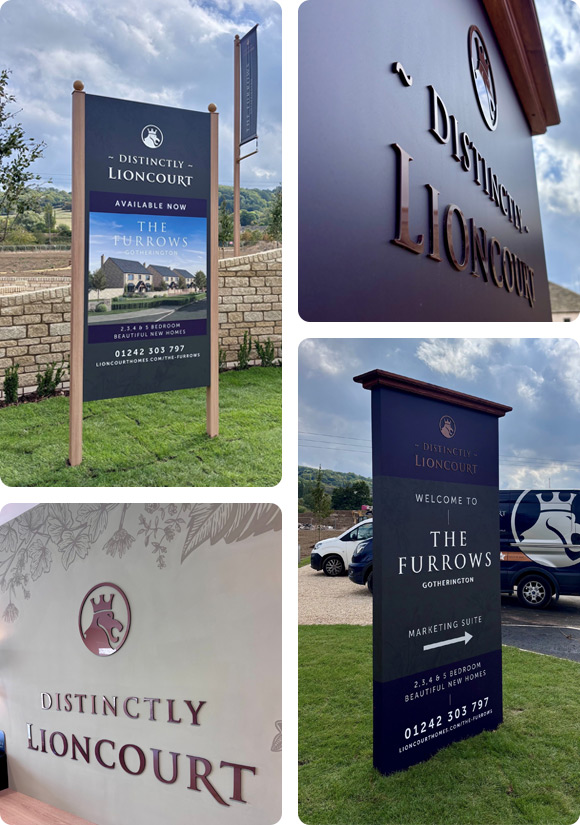
Large format signage can be reviewed and approved in daylight even when it will be used well into the evening. After dark, the position of the sign, surrounding lighting and the direction people approach from all influence how easily it can be seen and understood.
For outdoor signage produced through large format printing, the viewing route, available light, sign position and choice of material need to be considered together before the specification is finalised. A retroreflective, backlit or illuminated format will not suit every site because each relies on different lighting and viewing conditions.
At CDP Print Management, we manage signage and graphic display projects from site survey through to production and installation. This is why we bring practical site information into the specification before the job reaches print.
Key points before specifying outdoor signage
Understand the real viewing conditions.
Distance, approach direction, surrounding light and sign position all influence visibility.
Match the format to the site.
Retroreflective, backlit and illuminated signage address different visibility requirements.
Verify the proposed solution before rollout.
Where after-dark visibility matters, review the position and material under representative conditions.
Allow for differences between sites.
A multi-site programme can use common standards without assuming every location has identical viewing or installation conditions.
Why can outdoor signage be harder to read after dark?
The artwork does not change after dark, but the way people see it does. Changes in lighting can affect how colour and contrast are perceived, while glare or reflections may make a sign harder to read. The Health and Safety Executive recognises these as relevant visibility factors.
The viewing position matters too. Someone who sees a sign briefly on approach has less time to take in the information than someone standing in front of it. If the message is dense or the important information is difficult to find, that shorter viewing window makes the problem more noticeable.
What site conditions affect outdoor signage visibility?
With large format printing for outdoor signage, the proposed position should shape the specification. Viewing direction and surrounding light affect visibility, while the mounting surface, access and nearby obstructions influence what can be installed practically.
A sign viewed head-on will not be experienced in the same way as one approached at an angle. Shadows, reflections and nearby structures may affect the sightline. The surface itself also matters because it determines how the sign can be fixed and what installation work is required.
At CDP Print Management, we use site surveys to establish the practical requirements before large format printing begins. A survey can confirm dimensions and sign positions while identifying surfaces, access, fixings and installation obstructions. We use those findings to shape the artwork, production and installation plan.
For multi-site projects, we can record the requirements for each location instead of assuming the same installation will work everywhere. That gives each site a clearer basis for artwork, production and installation.
Before you lock the signage specification
We can review the site information, proposed sign position, surface and installation requirements before the production specification is finalised.
Should you use reflective, backlit or illuminated signage?
Material choices in large format printing need to reflect how the sign will be viewed and what light is available at the site. Surface finish, retroreflection and illumination solve different problems.
Matt finish
A matt finish changes the way light reflects from the surface. It still depends on the available light around the sign.
Retroreflective material
Retroreflective material returns suitable incident light towards its source. This can improve night-time visibility where enough light reaches the surface and the viewing conditions are appropriate.
Backlit graphics
Backlit graphics are designed to be illuminated from behind. They can provide a more controlled light source, although the installation needs to accommodate the lighting system and its power requirements.
Illuminated signage
Illuminated signage uses an internal or external light source, so it does not rely entirely on ambient light. Position, power supply and installation still need to be resolved before the format is specified.
In practice, retroreflective material may suit a location where suitable incident light reaches the sign. If the sign needs its own controlled light source, a backlit or illuminated format may be more appropriate. The viewing route and installation constraints remain part of that decision.
How do viewing distance and sign position affect signage readability?
In large format printing, viewing distance has a direct bearing on how much detail remains useful. As viewing distance increases, the main message needs to remain clear without relying on small or secondary detail. When people only have a few seconds to look, the main instruction, location or offer needs to stand out quickly.
Position changes the reading experience too. Artwork that feels clear at close range may need simplifying when the finished sign is viewed from further away or approached at an angle.
Before production, review the artwork at a representative size and distance. This shows whether the amount of information suits the way the sign will actually be seen. For broader artwork and readability guidance, see our guide to large format signage printing.
What should you check before outdoor signage goes into production?
A PDF proof cannot show everything about how large format printing will work once the sign is installed. For that reason, the final check should confirm that the proposed sign still works in the position for which it was designed.
Confirm the position, dimensions and likely viewing route against the approved artwork.
Check the mounting surface and any access requirements that could affect installation.
Where after-dark visibility is important, revisit the proposed position under the conditions in which the sign will normally be viewed.
Where appropriate, review a material sample or proposed position under representative conditions before rollout.
The level of checking should reflect the project. A prominent entrance sign or a multi-site rollout may justify more site work than a temporary display with a short lifespan.
How should you plan a multi-site signage rollout?
For multi-site large format printing projects, a shared specification helps control branding and production standards, but individual sites may still need different installation details. The same artwork might be viewed from a different distance, mounted on another surface or installed under very different surrounding light.
Keep consistent
Approved artwork and version control
Brand standards
Agreed production requirements
Material or format standards where site conditions allow them to remain common
We manage large format printing and signage projects from site survey and artwork preparation through to production and installation. We carry the survey findings into artwork and production planning, so later decisions reflect the conditions identified at the start.
Our signage work covers site surveys, supplier management, signage printing and installation. On nationwide projects, we have specified individual locations separately instead of assuming the same installation will suit every site.
For estates, housing, education, retail and other multi-site organisations, this provides a way to maintain consistent signage while accounting for practical differences between locations.
Planning signage that needs to stay visible after dark?
If you are planning new outdoor signage or a wider rollout, bring the site information into the brief before the specification is locked. We can review the requirements and coordinate the project from artwork and production through to installation.








 Talk to our team about your large format printing and signage requirements.